
Stating that India's consolidated deficit is the highest among the G20 nations, Gopinath added it is important for India to undertake reforms.

India is expected to be among the top contributors in terms of incremental ad spends in the world, only behind the US and China.

Recent IMF forecast said China's growth is expected to slow down.

Much of the Q3 data will simply not be available for the CSO to factor in its calculation.

A normal monsoon, softer interest rates and inflation, pent-up demand, along with mild budgetary support may help growth pick up in coming quarters.

Yes Bank was the top loser in the Sensex pack cracking 6.51 per cent, followed by SBI, Axis Bank, Vedanta, Sun Pharma, ICICI Bank, IndusInd Bank, ITC, Infosys and Tech Mahindra, shedding up to 3.69 per cent.

Growth has slowed in some of the large emerging economies, its interim economic assessment report added. "One factor has been a rise in global bond yields -- triggered in part by an expected scaling back of the US Federal Reserve's quantitative easing -- which has fuelled market instability and capital outflows in a number of major emerging economies, such as India and Indonesia.

Earlier Rajeev Malik an analyst with Macquarie Group had downgraded India's economic growth forecast to 6.5 per cent for the fiscal ended March 2010, from 7 per cent on account of weak monsoon.

Attributing the growth to an upswing in consumption and investment, the World Bank has said India will continue to be the fastest growing major economy in the world.

Expressing disappointment over the RBI's move for not cutting the key policy rates, India Inc on Tuesday asked the government to take immediate action to revive growth and boost investments.

The brokerage also pegged 2013-14 growth at 6.9 per cent and at 7.5 per cent for FY'15. It also has one of the highest gross domestic product forecasts for the current fiscal at 5.7 per cent.

Economy showing mixed signals, outlook challenging: FinMin

Besides Surat, which will also be the world's fastest growing city during 2019-35, the other nine cities are Agra, Bengaluru Hyderabad, Nagpur, Tiruppur, Rajkot, Tiruchirappalli, Chennai and Vijayawada.

India's economic growth accelerates to 7.4% in Sept quarter

A piece of slightly negative news can cause a serious setback, warns Debashis Basu.
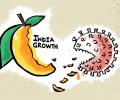
Former finance secretary Subhash Chandra Garg went on to say that the 2020-21 fiscal will go down in the history of India as the year when India got way-laid from its story of three decadal outstanding growth.

Finance Minister Pranab Mukherjee, while speaking to media persons in New Delhi on Tuesday, said that India's economy is responding well. He also informed that the government took essential measures to tackle the adverse impact of inflationary pressure.
While there is little doubt that the emerging economies present the best chances for economic growth, not all countries will prosper at the same rate, says the Wealth Report 2012 by Knight Frank & Citi Private Bank.

Gandhi also attacked Prime Minister Narendra Modi over the economic situation in the country, saying the PM should get his head "out of the sand" to deal with the problem facing the country.

New series points to a sharp recovery since FY14.

Should you expect 15 per cent return over a period of 20 years? Dwaipayan Bose has the answer
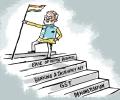
As the Ukraine conflict impacts the global GDP, India is projected to grow by 6.4 per cent in 2022, slower than the last year's 8.8 per cent but still the fastest-growing major economy, with higher inflationary pressures and uneven recovery of the labour market curbing private consumption and investment, according to a UN report. The UN Department of Economic and Social Affairs said in its World Economic Situation and Prospects (WESP) report released on Wednesday that the war in Ukraine has upended the fragile economic recovery from the pandemic, triggering a devastating humanitarian crisis in Europe, increasing food and commodity prices and globally exacerbating inflationary pressures. The global economy is now projected to grow by only 3.1 per cent in 2022, down from the 4.0 per cent growth forecast released in January 2022.
Unctad's GDP projection is broadly in line with forecasts by Indian agencies like the Reserve Bank of India and the Prime Minister's Economic Advisory Council, which have projected a growth rate of 7.9 per cent and 7.7 per cent respectively in 2008-09, as against 9 per cent recorded in 2007-08. Finance Minister P Chidambaram expects the Indian economy to expand by more than 8 per cent this year.

The Survey lists some of the challenges that might impede India's progress.
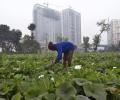
India's latest GDP numbers do not signal robust economic growth in near term.
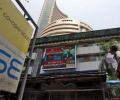
The stock markets, which had opened in the green on rate cut hopes, tumbled after the monetary policy announcement.

The government on Monday forecast annual economic growth to accelerate to 7.4 per cent in the fiscal year ending in March 2015

The Nifty Index features 50 of the largest companies in the country and represents close to 50 per cent of total market capitalisation. It is now trading at valuations that could only be justified if India Inc grows earnings at better than thrice the GDP growth rate. This is extremely unlikely, says Devangshu Datta.

Fiscal situation better but spending cuts likely in FY16 too.

Demonetisation impact, earnings growth, central bank policies will get attention.

Slight recovery in growth is expected only in July-September.

'RBI is already late in addressing inflation pressures.'

With the world's worst outbreak of COVID pandemic stalling a nascent economic recovery, the government has begun assessing the impact of the second wave of infections on different sectors and may look at providing support at an appropriate time to segments requiring fiscal help. Some of the economic indicators, including the Goods and Services Tax (GST) collections, still provide confidence and incoming data will throw some more light on the state of the economy, sources said. Services sectors like hospitality, tourism and aviation which had just started recovering were hit hard by the second wave of COVID, the sources said, adding these segments might need some support on an urgent basis from the government.

After raising interest rate by a cumulative 250 basis points in 11 months, the Reserve Bank of India (RBI) on Thursday unexpectedly kept benchmark rate unchanged as global banking woes added uncertainty to the economic outlook. Five out of six members of MPC voted to remain focused on the withdrawal of accommodation to ensure inflation aligns with target while focusing on growth, RBI Governor Shaktikanta Das said on Thursday. The Monetary Policy Committee of the central bank decided to take a pause after a rate hike seen in previous six consecutive policies.

On the revenue front, the finance ministry was expecting higher proceeds from non-tax revenue.

There are reports that the government will soon cut income taxes by about Rs 50,000 crore to boost consumption.
Prime Minister Modi, I suggest that, instead, you distribute about one lakh crore rupees per year to the 80 crore poor, which will boost both consumption and economic growth, suggests Kalyan Singhal, McCurdy Professor of Business at the University of Baltimore.

India's services sector activity expanded at the second-fastest pace in more than a decade during November, driven by sustained rise in new work and improvement in market conditions, a monthly survey said on Friday. The seasonally adjusted India Services Business Activity Index was at 58.1 in November, fractionally down from 58.4 in October. The November figure points to the second-fastest rise in output since July 2011. For the fourth straight month, the services sector witnessed an expansion in output.

India's appetite for imported crude oil may wane in fiscal year (FY) 2023 from record levels in pre-pandemic 2019-20 fiscal as higher oil prices, a spillover from the conflict in Ukraine, and increasing use of biofuels affect domestic demand for petroleum products. Brent crude surged to a nine-year high, shy of a July 2008 record $147.50 a barrel, before declining to around $100 a barrel - but the volatility in commodity rates will slow global economic growth and use of fuels. Demand for all oil products may grow at only 2-3 per cent in FY23, slower than the current fiscal and nearly half the 5.5 per cent growth estimated by the petroleum ministry, according to industry officials.

So, while it is great that India's numbers look relatively good, don't raise a cheer just yet, points out T N Ninan.
Global IT services spending is likely to increase at around 7-8 per cent over the medium term to $500 billion in 2007 from $470 billion in 2006.
